Imagine having a store that never closes, never takes a day off, and can sell to anyone — anywhere in the world. That’s exactly what an ecommerce website can do for you. Whether you’re a small business owner with big dreams, or someone who just wants to understand how online selling works — you’ve come to the right place.
In this guide, we’ll break down everything in simple, easy words. Types of online stores, costs, platforms, and how to pick the right team to build it all. No complicated terms. No fluff. Just everything you need to know, explained clearly. Let’s get into it.
What Is an Ecommerce Website and Why Does It Matter?
An ecommerce website is basically an online store. It’s a website where people can browse products or services, add them to a cart, and pay — all without leaving their couch. Think of it as your physical shop, but open 24/7 and accessible to anyone in the world.
Whether you’re a small business owner or a large brand, having a store online is no longer optional. Customers today expect to find you on the internet. If you’re not there, they’ll just buy from someone who is.
Types of Ecommerce Websites
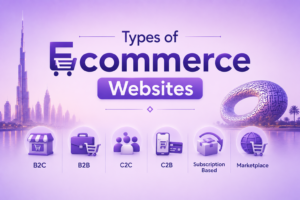
Not all online stores are the same. They come in different shapes and sizes depending on who’s buying, who’s selling, and what’s being sold. Here are the main types:
B2C (Business to Consumer) — This is the most common type. A business sells directly to regular customers. Most online shopping you do falls into this category.
B2B (Business to Business) — Here, businesses sell to other businesses. Think bulk suppliers or software companies selling to agencies.
C2C (Consumer to Consumer) — Platforms where people sell to each other, like eBay or Facebook Marketplace.
D2C (Direct to Consumer) — Brands that sell their own products directly, cutting out the middleman entirely.
Famous Ecommerce Websites Around the World
Some online stores have become household names. Amazon, Alibaba, eBay, Walmart, and Etsy are among the most famous ecommerce websites globally. They’ve set the standard for how online shopping should feel — fast, easy, and trustworthy. Studying what they do right is honestly one of the best ways to understand what works.
Best Ecommerce Websites in the UAE
The UAE has a strong and growing online shopping culture. Noon, Amazon.ae, Namshi, and Sivvi are among the best ecommerce websites in the UAE right now. The market is competitive, mobile-first, and moving fast — which makes it a great place to launch an online store if you’re targeting the region.
Local Ecommerce Websites: Why They Matter
Big global platforms get all the attention, but local ecommerce websites play a huge role in everyday commerce. They serve specific communities, offer local payment options, support local languages, and often build stronger customer loyalty because people trust what feels familiar. If you’re targeting a specific city or country, going local in your approach can be a real advantage.
Advantages and Disadvantages of an Ecommerce Website
Like anything in business, online stores have their pros and cons. It’s good to know both before you dive in.
Advantages:
- Open 24/7 without extra staffing costs
- Reach customers anywhere in the world
- Lower overhead than a physical store
- Easy to track sales, traffic, and customer behavior
- Scalable — you can grow without moving to a bigger building
Disadvantages:
- You can’t let customers touch or try the product
- Competition online is intense
- Trust can be harder to build than face-to-face
- Returns and logistics can get complicated
- Security and fraud risks need constant attention
Overall, the advantages far outweigh the downsides — especially if your store is well-built and well-marketed.
What Is an Ecommerce Website Application?
An ecommerce website application is simply the mobile app version of an online store. Instead of visiting a website on a browser, customers download an app on their phone and shop from there.
Apps tend to load faster, feel smoother, and can send push notifications — which means you can remind customers about a sale or an abandoned cart. For businesses with a loyal customer base, having a dedicated app can seriously boost repeat sales. That said, for most small to mid-size businesses, a mobile-friendly website is a solid starting point before investing in a full app.
Average Cost of an Ecommerce Website
This is the question everyone asks, and the honest answer is: it depends. But let’s break it down so you have a realistic picture.
Factors That Affect Ecommerce Website Pricing
The average cost of an ecommerce website varies based on several things — the platform you use, how many products you’re selling, whether you need custom features, and the experience level of the team building it. A simple store on Shopify can be set up for a few hundred dollars. A fully custom-built platform with advanced features can run into the tens of thousands.
Here are the main cost factors:
- Platform choice — Shopify, Woo Commerce, Magento, etc. all have different pricing structures
- Design — A custom design costs more than using a pre-made theme
- Features — Payment gateways, inventory systems, filters, wish lists, and integrations all add to the cost
- Content — Product photos, descriptions, and SEO setup take time and money
- Maintenance — Ongoing updates, security, and support are a recurring cost
Budget Breakdown by Business Size
| Business Type | Estimated Cost |
| Small / Startup | $500 – $3,000 |
| Mid-size Business | $3,000 – $15,000 |
| Large / Enterprise | $15,000 – $100,000+ |
These are rough ranges, but they give you a starting point for planning your budget.
Ecommerce Website Project: From Idea to Launch
Starting an ecommerce website project can feel overwhelming, but it doesn’t have to be. Here’s a simple roadmap:
- Define your niche and target audience — Who are you selling to, and what problem are you solving?
- Choose your platform — Shopify is great for beginners. Woo Commerce works well if you’re on WordPress. Magento suits larger operations.
- Plan your site structure — Home page, category pages, product pages, checkout, and about page at minimum.
- Design and build — Keep it clean, fast, and mobile-friendly.
- Add your products — Write clear descriptions, use good photos, and set competitive prices.
- Set up payments and shipping — Make the checkout process as simple as possible.
- Test everything — Click every button. Buy a test product. Break it before your customers do.
- Launch and market — SEO, social media, paid ads, and email marketing will drive traffic to your store.
How to Choose the Best Ecommerce Website Development Company
Building an online store yourself is possible, but working with professionals saves you time, headaches, and often money in the long run. Here’s what to look for when choosing the best ecommerce website development company for your business:
- A strong portfolio — Have they built stores in your industry before?
- Clear communication — Do they explain things in plain language or drown you in jargon?
- Post-launch support — Will they help you once the site is live?
- SEO knowledge — A beautiful store that no one can find is useless. Make sure they understand search engine optimization.
- Transparent pricing — No surprise invoices halfway through the project.
Don’t just go with the cheapest option. Go with the team that understands your goals.
We check every box on that list. Our team has helped businesses of all sizes build fast, good-looking, and search-friendly online stores. Whether you’re starting from scratch or rebuilding something that isn’t working — we’ve got you.
Get a Free Consultation Today — Let’s talk about your project and figure out the best path forward together.
Ecommerce Websites List: Top Platforms to Consider in 2026
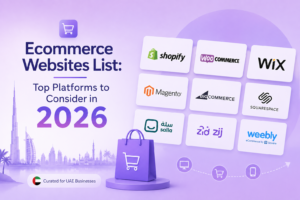
If you’re building a store, here’s a quick ecommerce websites list of the most popular platforms worth considering:
- Shopify — Best for beginners and growing brands
- Woo Commerce — Great for WordPress users who want flexibility
- Magento (Adobe Commerce) — Powerful, but better suited for larger businesses
- Big Commerce — Strong built-in features, no transaction fees
- Wix eCommerce — Simple drag-and-drop, good for very small stores
- Squarespace — Clean design focus, good for lifestyle and creative brands
Each platform has its strengths. The right one depends on your budget, technical comfort level, and where you want to take your business.
Final Thoughts
Getting a website for e-commerce right takes planning, the right team, and a clear understanding of your customers. But once it’s up and running well, it becomes one of the most powerful assets your business has. It works while you sleep, reaches people you’d never find otherwise, and gives your brand a professional home on the internet.
If you’re ready to build something great, or if you’re not sure where to start — that’s exactly what we’re here for. Our digital marketing and web development team helps businesses launch, grow, and scale their online presence. Let’s talk.
FAQs
What is the average cost of building an ecommerce website in the UAE?
It ranges from $500–$3,000 for small/startups, $3,000–$15,000 for mid-size businesses, and $15,000–$100,000+ for large enterprises.
Which platform is best for beginners?
Shopify is the top choice for beginners — it’s easy to use, beginner-friendly, and great for scaling your business.
What’s the difference between an ecommerce website and an app?
A website runs on a browser, while an app is downloaded on a phone. Apps are faster, smoother, and can send push notifications to customers.
Which are the top ecommerce websites in the UAE?
Noon, Amazon.ae, Namshi, and Sivvi are among the most popular and trusted online stores in the UAE.
What is the biggest advantage of having an ecommerce website?
Your store stays open 24/7, reaches customers worldwide, and has significantly lower overhead costs compared to a physical store.