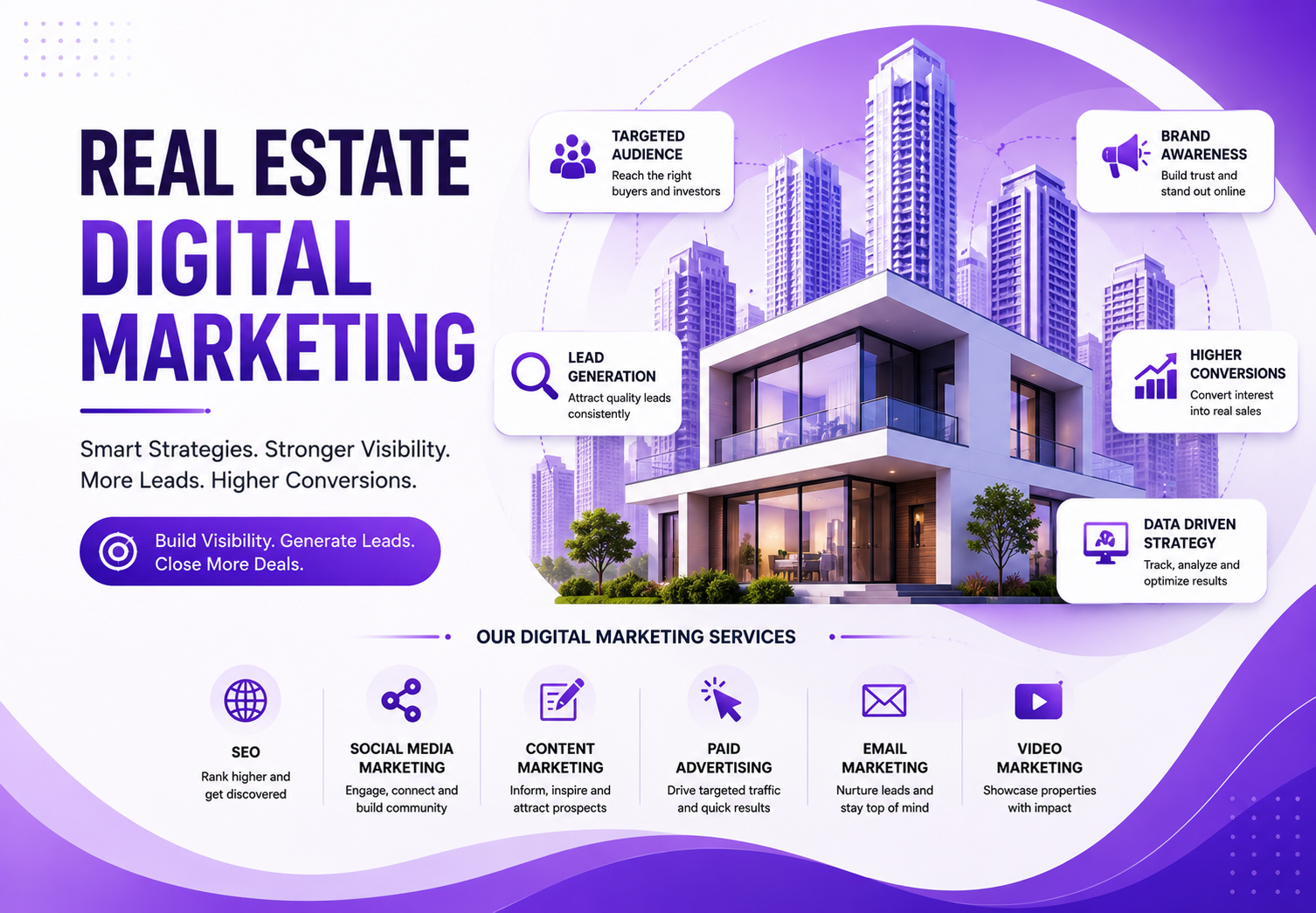
Real estate digital marketing works through five strategies. Local search visibility, high converting property pages, targeted paid ads, steady lead nurturing, and tracking which channel actually books a client.
A broker in Denver spent $40,000 on Zillow leads last year, and every one of those leads also went to four other agents in her market. She was paying to compete against herself.
Most agents are renting their business instead of building one. The fix is the same whether you run a solo practice or a full team: own your traffic instead of borrowing it.
Why Most Real Estate Agents Are Renting Their Business, Not Building One
This is what new agents need to know. A lead from a portal site is not really your lead. It belongs to the platform. You are paying for temporary access to it, and so are your competitors, often at the exact same moment.
Portal fees keep climbing every year. Zillow raised its cost per lead multiple times over the past few years, and agents have almost no control over that pricing.
Compare that to a lead that finds you through your own website or your own local content. That lead is yours. Nobody else is bidding on it while you are on the phone with them.
It feels slower to build at first, but it compounds instead of resetting every month, which is why agents who invest early spend far less on leads five years later.
What Real Estate Digital Marketing Actually Means
Digital marketing for real estate agents is the work of getting buyers and sellers to find you directly, instead of finding you through a middleman platform.
Digital marketing for real estate, at its core, covers your website, your local search presence, your paid ads, your follow-up system, and increasingly, whether AI tools mention your name at all.
It is not the same as paid lead generation. Paid leads stop the moment you stop paying. Owned marketing keeps working long after you publish a page or rank for a search term.
5 Strategies to Generate More Real Estate Leads
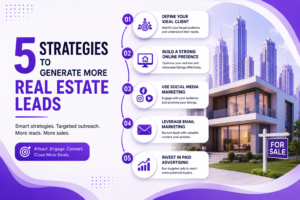
These five real estate lead generation strategies work best together, not as separate jobs picked one at a time. Skip one, and the other four have to work much harder to make up for it.
Strategy 1: Own Your Local Search Visibility With Real Estate SEO
Rank for your city and your neighborhoods, not just your brand name. That is the real goal of local SEO for an agent.
Nobody flies across the country to buy a house from a stranger found on page one of Google nationally. Your buyer is almost always searching within your metro area, often within a specific neighborhood.
Why is local SEO important for real estate agents?
It puts you in front of that exact search. Start with your Google Business Profile, claim it, verify it, and fill every field completely. Add real photos, not stock images of houses that are not yours.
Build a page for each neighborhood you serve. “Homes for sale in Riverside Heights” beats a generic “search listings” page almost every time, since it matches exactly what a buyer typed.
Keep your name, brokerage, and phone number identical across Zillow, Realtor.com, Yelp, and your own site.
Strategy 2: Build Property and Neighborhood Pages That Actually Convert
Give every property and every neighborhood its own dedicated page. A property page and a landing page are not the same thing, and treating them the same costs agents leads every week.
A property page needs the listing, real photos, and one simple way to book a showing. A neighborhood page should answer what a buyer actually wonders: the schools, the commute, what homes here actually sold for last quarter.
What Pages and Funnels Work Best for Real Estate?
Round out the setup with a third page type built for sellers, not buyers. While property and neighborhood pages pull buyers in, a seller page should chase one action only, a home valuation request, not five competing buttons.
IDX integration lets your site pull real MLS listings directly, so visitors search without ever leaving your domain. Skip it, and every listing click sends your traffic straight to Zillow instead of a page you own.
Strategy 3: Run Paid Ads Aimed at a Single Conversion Goal
Use Google Ads for people already searching, and Meta ads for people who are not searching yet. Google Ads catch someone typing “homes for sale in Riverside Heights,” high intent traffic ready to act.
Meta ads work better for awareness, showing a listing to the right profile before they start searching.
Should Agents Use Google Ads or Social Ads?
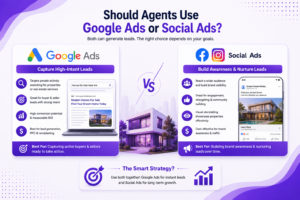
Google Ads clicks for competitive real estate terms can run several dollars, sometimes more in a hot market. Meta ads usually cost less per click but convert lower, since that person was not actively looking yet.
Run Google Ads on your highest value listings and search terms. Run Meta ads for awareness and to retarget visitors who checked a property page but did not convert.
Retargeting alone recovers people who got distracted before booking a showing, which happens constantly in a purchase this large. Our Google Ads versus Meta Ads breakdown goes deeper into budget splits by market size.
Strategy 4: Nurture Leads With Email, Video, and Fast Follow-Up
Follow up within minutes, then stay in touch with email and video until the lead is ready to act. Generating a lead means almost nothing if it never becomes a client, and this is the step most agents handle the worst.
What CRM Setup Helps Real Estate Agents Follow Up With Leads Faster?
The simplest one that actually gets used daily. A CRM that texts a new lead automatically within minutes, tracks every touchpoint, and reminds you to follow up again on day three and day ten beats a complicated system nobody opens.
How Can Automation Help Real Estate Agents Generate Leads?
It does not create the lead. It protects the lead once you have one. A welcome email, a saved search alert, and a short drip sequence keep a buyer engaged for the weeks it actually takes most people to decide.
Add a short video walkthrough of a neighborhood, filmed on a phone, since it often builds more trust than a polished, professionally produced one.
Strategy 5: Track Which Channel Actually Produces a Booked Client
Track calls and form fills all the way back to closed deals, not just clicks or lead count.
Most agents can tell you how much traffic a channel brought in. Far fewer can tell you how many of those visitors actually became paying clients, and that gap is where marketing budgets quietly go to waste.
What Tools Help Real Estate Agents Scale Their Marketing?
Three categories, working together, do the job. Call tracking, form tracking, and a simple dashboard that ties both back to real closings, not just clicks.
Traffic and leads are not the same thing as revenue. A channel producing thirty form fills a month means nothing if none of them ever close. Track cost per closed deal by channel, not just cost per lead, and the picture usually looks very different from what the dashboard first suggests.
Real Estate Marketing at a Glance
We built this table around cost, speed, and effort, based on how these five strategies typically perform for an individual agent or small team.
| Strategy | Speed to First Lead | Ongoing Cost | Builds an Owned Asset |
| Local SEO and Google Business Profile | 2 to 3 months | Low, mostly time | Yes |
| Property and neighborhood pages | 1 to 2 months | Low to moderate | Yes |
| Paid ads | Days | Moderate to high | No |
| Email and nurture automation | Ongoing | Low | Yes |
| Channel tracking and attribution | Immediate insight | Low | Yes |
Showing Up in AI Overviews as the Local Source of Truth
Search does not look the way it did two years ago. Buyers now ask an AI assistant directly instead of typing a normal search query, and real estate is one of the categories where this shift is happening fastest.
Can ChatGPT generate leads?
Not directly, but it increasingly decides who gets mentioned when someone asks “who’s a good realtor in Riverside Heights.” That mention is worth more than a click, since it comes with built in trust.
Being the source AI tools cite means having genuine, specific local content nobody else has bothered to write.
A page about the exact commute times from a neighborhood, or the real difference between two nearby school districts, gives an AI system something concrete to pull from. A portal listing with a templated description never gives it that.
How Much Should an Agent Budget for Digital Marketing?
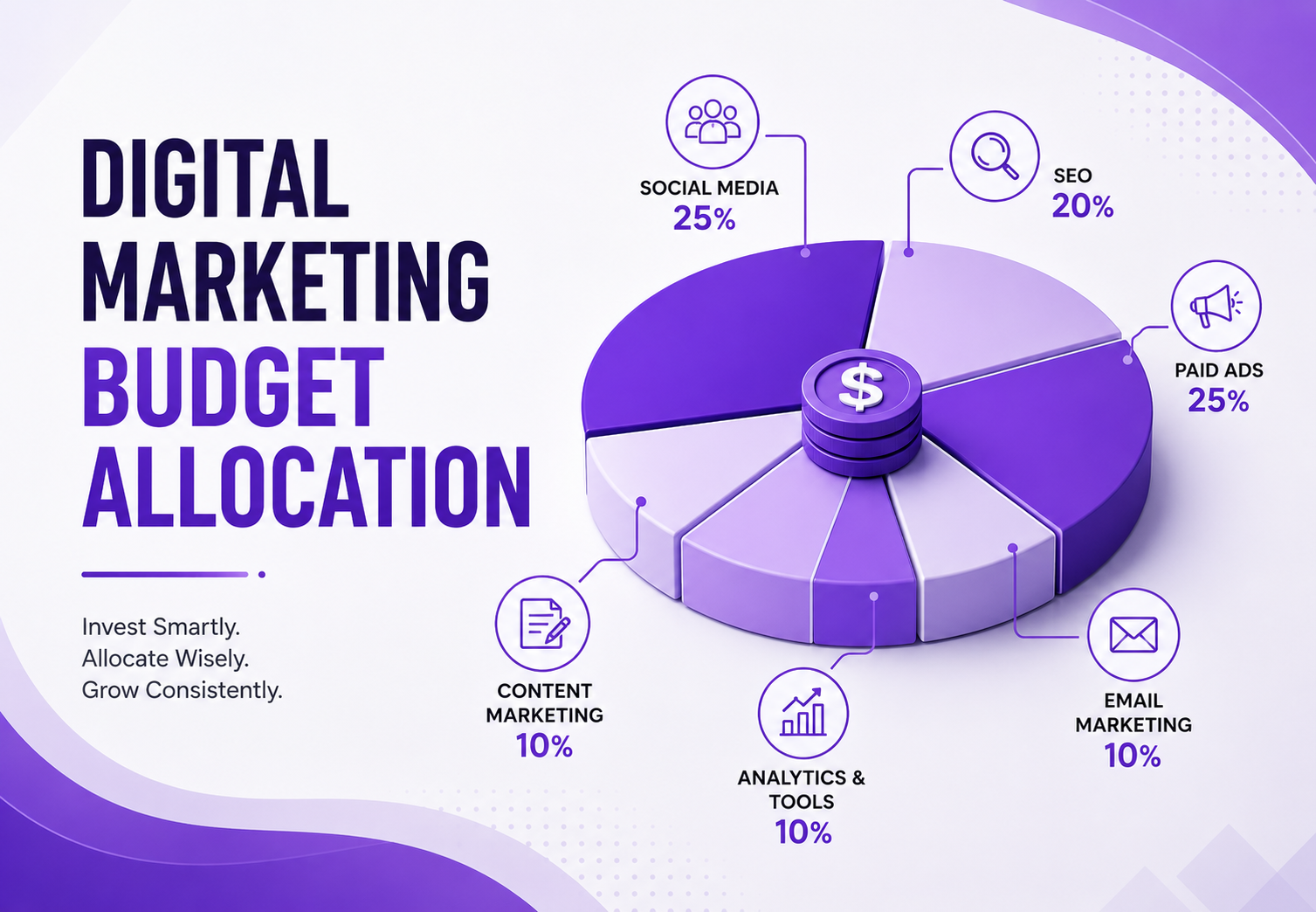
Most individual agents spend $500 to $2,000 a month once ads, tools, and content are combined. Teams and small brokerages budget more since they run ads across more listings at once.
A simple starting split:
| Where It Goes | Share of Budget |
| Paid ads | 40% |
| Local SEO and content | 30% |
| CRM and tracking tools | 30% |
Adjust it once you see which channel actually books clients for you.
How to Build Trust With Real Estate Buyers and Sellers
A real headshot and a real bio do more for conversion than any polished ad ever will. Buyers are trusting you with the largest purchase of their life. They want to know a real, licensed person is on the other end.
Reviews matter here the same way they matter in any local service business. A steady stream of honest reviews, requested right after closing while the experience is still fresh, builds far more trust than a handful of old reviews from years ago.
This connects to what search engines and AI tools weigh when deciding who to trust, often called E-E-A-T.
A real name, a real license number, and consistent local knowledge all feed into that same trust signal.
5 Most Common Mistakes Realtors Make in Online Marketing
These five mistakes show up constantly, and every one of them is fixable without a bigger budget.
- Sending ad clicks to a generic homepage. If the ad promised a specific listing or neighborhood, the click should land there, not on a page the visitor has to search through again.
- Stuffing keywords into bios and listing descriptions. Text that reads like nobody wrote it loses trust instantly, with both readers and Google.
- Buying leads without building anything owned underneath them. The moment the ad budget pauses, the entire pipeline goes dry, since nothing was left behind to keep working.
- Posting listings on social media with no way to capture contact info. A beautiful photo with no link to a landing page is just decoration, not marketing.
- Running a slow or non-mobile-friendly website. Most buyers browse from a phone. A page that loads slowly loses that visitor before they see a single listing.
Most agents skip fixing these not because they are hard, but because nobody stopped to notice them while running showings.
Conclusion
Stop renting your entire business from a portal that can raise its prices whenever it wants. Start with your Google Business Profile this week, since it costs nothing and moves the fastest. Then build one real neighborhood page around the area you know best.
Real estate digital marketing works best when you stop chasing single tactics and build these five strategies together, slowly turning rented traffic into something you actually own.
Looking for digital marketing services for real estate that actually build something you own? Our free marketing audit will show you exactly which of these five strategies is costing you the most leads right now, and where to fix it first.
FAQs
What digital marketing strategies work best for real estate agents?
Local SEO, dedicated property and neighborhood pages, targeted paid ads, consistent lead nurturing, and tracking which channel actually closes deals. Together these outperform any single channel alone.
Do real estate agents need paid advertising?
Not always, but it helps fill gaps while organic strategies like local SEO build up. Ads produce leads fast, owned content produces leads that keep coming without ongoing spend.
What content should real estate agents create?
Neighborhood guides, market updates, and short video walkthroughs perform best. Content built around one specific area beats generic real estate advice almost every time.
How do I measure real estate marketing performance?
Track cost per closed deal by channel, not just cost per lead or website traffic. A channel with more leads is not better if fewer of those leads actually close.
Is social media alone enough to generate real estate leads?
Rarely on its own. It works best paired with a strong landing page, since most social platforms are built for discovery, not for closing a lead directly inside the app.