Creating content that ranks high on Google isn’t just about writing well—it’s about making SEO friendly content that both search engines and real readers enjoy. When you know how to structure and optimize your articles properly, your content can attract more visitors, build trust with your audience, and deliver meaningful results for your business. Well-optimized content not only brings traffic but also helps you stand out from competitors in your niche.
In this guide, we’ll walk you through practical steps to create content that is easy to read, fully optimized, and designed to perform. You’ll learn how to plan, write, and organize your articles so they engage your audience, answer their questions, and turn casual visitors into loyal followers. By following these tips, you can turn your content into a powerful tool that drives consistent traffic and supports long-term growth for your business.
What Is SEO Friendly Content?
SEO friendly content is content that satisfies both search engines and human readers. It provides clear answers to users’ questions, aligns with search intent, and follows best practices such as proper keyword research, meta title optimization, and meta descriptions. By addressing what users are looking for, this type of content helps improve visibility and ensures your pages show up in the right search results.
When created correctly, SEO friendly content doesn’t just rank well—it also keeps visitors engaged. Using strategies that improve user engagement metrics, like time on page and click-through rates, ensures that readers stay longer and interact more with your website. This combination of relevance and engagement makes your content a powerful tool for driving traffic and building long-term trust.
Key Elements of SEO Friendly Content
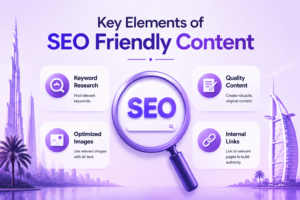
Creating SEO friendly content requires a combination of strategy, structure, and optimization. By focusing on the right keywords, clear headings, and proper linking, you can make your content both engaging for readers and attractive to search engines.
Keyword Research and LSI Keywords
Start with thorough keyword research to find the primary and long-tail keywords your audience is searching for. Incorporate Latent Semantic Indexing (LSI) keywords naturally to cover related terms and help search engines understand your topic.
Using Header Tags (H1, H2, H3)
Organize your content with header tags to make it easier to read. H1 is for the main title, H2s for major sections, and H3s for subsections. Proper use of header tags improves content readability and helps search engines understand your page’s structure.
Meta Optimization and Linking
Optimize meta titles and meta descriptions with your main keyword to make your pages more appealing in search results. Add internal links to related pages and external backlinks to trusted sources using descriptive anchor text for better context.
Readability and Structure
A clear content structure, short paragraphs, and small lists make the content easier to scan and keep readers engaged. Well-structured content also improves user engagement metrics, encouraging visitors to spend more time on your site.
By combining all these elements, your content becomes both user-friendly and search engine-friendly. Following these practices consistently ensures higher visibility, better engagement, and long-term SEO success.
Mastering Technical SEO for Better Rankings
Technical optimization is just as important as the content you write. Make sure your website is fully mobile optimized and pages load quickly, as page speed affects both rankings and user experience. Use image alt text to describe visuals, making them easier for search engines to understand.
Key technical SEO practices include:
- Implementing structured data / schema markup to enable rich results and featured snippets
- Keeping URL structure short, descriptive, and keyword-friendly
- Optimizing page load speed for faster performance
- Ensuring full mobile optimization for all devices
- Using image alt text for all visuals to improve accessibility and SEO
Following these steps helps search engines crawl your site effectively and provides a better experience for your visitors, ultimately boosting visibility and engagement.
Advanced SEO Techniques to Stay Ahead

To stay competitive in search rankings, it’s important to update your content regularly to maintain content freshness. Encouraging social sharing signals can also boost visibility and attract more organic traffic. Additionally, focusing on voice search optimization by using conversational phrases helps your content reach users who rely on voice assistants for search.
Organizing your content with topic clusters and applying semantic SEO strategies ensures that search engines understand your site’s structure and relevance. Avoid duplicate content and conduct periodic content audits to review and improve older articles, keeping your website optimized and authoritative over time.
Conclusion
Creating SEO friendly content is about combining strong writing with technical, semantic, and strategic SEO practices. By optimizing for meta titles, header tags, internal links, page speed, structured data, and readability, you can attract more organic traffic, improve engagement, and build lasting authority. Regular updates and understanding search intent will keep your content performing well and help you stay ahead in search rankings.
FAQs
What is SEO friendly content?
SEO friendly content is content that satisfies both search engines and human readers, matches search intent, and follows best practices like keyword research, meta title optimization, and meta descriptions.
How can I optimize my content for better rankings?
Use header tags (H1, H2, H3), internal links, external backlinks, image alt text, structured data / schema markup, and ensure your site is mobile optimized and fast-loading.
What are some advanced SEO techniques?
Advanced strategies include topic clusters, semantic SEO, voice search optimization, encouraging social sharing signals, maintaining content freshness, and performing regular content audits.
How important is content readability?
High content readability keeps visitors engaged, improves user engagement metrics like time on page and click-through rates, and helps search engines understand your content better.
How do I prevent duplicate content?
Avoid copying content, use unique phrasing, and regularly perform content audits to identify and fix duplicates, ensuring your site remains authoritative and ranks well.